Margaret Thatcher Leadership Campaign Archive to Auction
Items from the Thatcher archive



An important cache of Margaret Thatcher documents including previously unseen letters held by her fellow 1975 leadership contender Edward du Cann come up for sale at Gorringe's on July 7.
The items, which have an estimate of £100,000, come from the family of Edward du Cann who stepped aside to allow Margaret Thatcher to become Conservative leader.
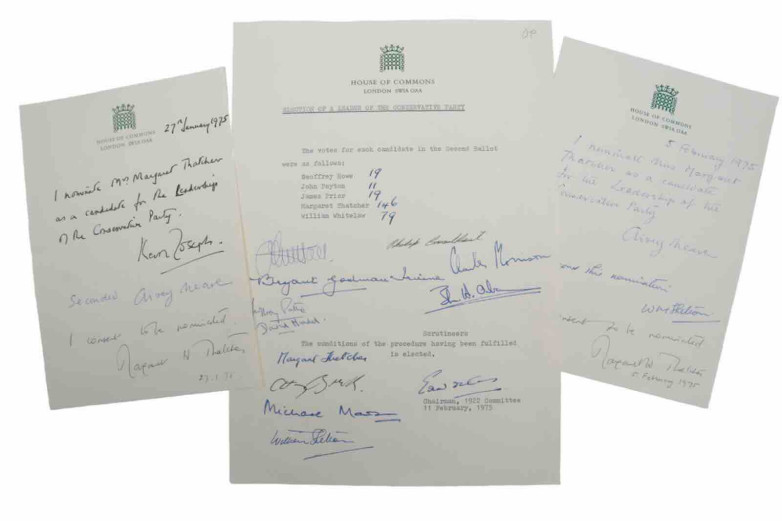
Among them are the historic nomination papers that confirmed Thatcher as Conservative leader, and signed correspondence with leading political figures of the day including a letter dated December 1974 signed by more than 15 Conservative colleagues imploring du Cann to stand, telling him it was ‘essential’ and that it was his ‘duty’.
“In an age of men and women who would do almost anything for power, my father did something almost unthinkable," said his daughter, Emma du Cann-Crowther, "he gave it away. The archive shows that he had the backing, likely had the votes, and Margaret Thatcher herself was willing to step aside for him. But there were other things he valued more, and my mother was at the heart of that decision. He chose to shield us from dangers and scrutiny that most families will never know, rather than chase a legacy."
Other items include the first round nomination paper dated January 27, 1975. Thatcher’s nomination was proposed by Keith Joseph, who had also stood aside, and seconded by Airey Neave who was later murdered by the INLA. Thatcher wrote underneath ‘I consent to be nominated’ and signed it "Margaret H [Hilda] Thatcher".
Alongside it is the result of the second ballot which is dated February 11, 1975 and is simply headed "Election of a leader of the Conservative Party". It carries the signatures of the scrutineers. Thatcher won emphatically, with 146 votes.
In addition, the archive includes notes and records from du Cann, as well as correspondence relating to the leadership election with the former Prime Minister Edward Heath and the Prime Minister of the day, Harold Wilson.