Folger Shakespeare Library Presents Open City: London, 1500-1700



(Washington, DC) In the two centuries between 1500 and 1700, London transformed from a medieval capital to an early modern metropolis. The city also underwent an unprecedented series of catastrophes and natural disasters: deadly plagues, religious disputes, civil wars, the Great Fire, the overthrow of Charles I, and economic upheaval. Yet rather than diminishing London, these events ushered in an era in which London wielded global influence as the seat of the emerging British Empire.
Open City: London, 1500-1700 explores the dramatic political, religious, and economic changes that reshaped London, from the dissolution of the monasteries to the rebuilding of the city after the Great Fire. Through three important gatherings places—churches, theaters, and markets—Open City examines how Londoners formed communities, negotiated social hierarchies, and understood their places in the world.
In addition to affecting life in the early modern period, many changes have ongoing impact. “All of these changes—to economic competition, to capital, to religion not being imposed by the state, to reigning in the power of monarchs—are changes that have defined our world today,” exhibition curator Kathleen Lynch said.
Lynch cites several examples of major changes that occurred during these two centuries that continue to affect life today, noting that by the end of the 17th century, the Church of England was no longer a state church, English rulers had agreed to a Bill of Rights limiting their powers, and increases in overseas colonization coupled with influxes of immigration carried economic and social impact.
“So much of the way we operate in Western democracies is due to the rules of the game established in this period,” Lynch noted.
Even for those who have never been there, London is familiar.
“People are interested in London, especially now with events such as the recent royal wedding and the upcoming Olympics. We feel a kinship to the city because of our shared history,” curator Betsy Walsh said.
In these two crucial centuries, London was home to figures who are now household names: famous monarchs like Henry VIII and his daughter, Elizabeth I; extraordinary dramatists such as William Shakespeare, Christopher Marlowe, and Ben Jonson; and architects Inigo Jones and Christopher Wren, whose works can still be seen today.
“This was a defining period of change in London’s history, when London moved from the periphery of Europe more to the center of world trade and world networks,” Lynch said.
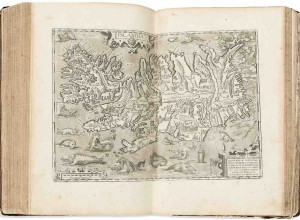
Maps offer a unique window into London’s metamorphosis, depicting changes inside the city as well as London’s deepening connections with the rest of the world.
“In the early maps we see most of the development clustered within the medieval city walls, with large green spaces outside of the city proper. Later maps document the rapid expansion of the city beyond the walls,” explained Walsh.
Using information from a variety of sources, Open City charts the wide-ranging changes wrought by new ideas, products, and people moving through its dynamic public spaces: churches, theaters, and markets.
Exhibition Highlights
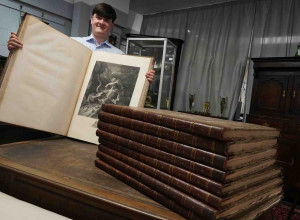
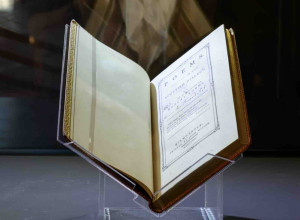
Open City features maps, diaries, letters, drawings, and other documents relating to London in the years between 1500 and 1700. The exhibition includes nearly 100 items drawn entirely from the Folger collection.
Highlights include:
- Broadening horizons. A panoramic view of London by Wenceslaus Hollar shows a rapidly growing city; two decades later, many of the buildings depicted in the etching were destroyed by the Great Fire.
- Rank and file. A chart showing the pew assignments of members of a London church offers a fascinating glimpse into social hierarchies and organized religion.
- Map quest. Maps from the period show London’s changing cityscape, as many former religious sites are repurposed and open spaces are gradually overtaken by urban development.
- Casualty lists. Records of plague victims, as well as those who died from other causes, are sobering reminders of the devastating effects of disease in an era before modern medicine.
- Shakespeare’s townhouse. The deed to a London townhouse purchased by William Shakespeare in Blackfrairs, the site of a former monastery, shows how locations often transitioned between religious and secular uses.
Open City brings the dynamic world of London on the cusp of the modern era to life. Through eyewitness accounts and other documentary sources, the exhibition offers on-the-ground testimony about what people experienced during the transformation of one of the world’s leading cities.